
David Keil
About David
David Keil was introduced to yoga in 1989 by his Tai Chi Chuan teacher. Both the Tai Chi and Yoga practice at the ripe age of 17 began his research into his own mind-body connections. His search continued through massage therapy where he discovered many insights and affirmations of what he had been exploring and finding on his own through his practices. One of the most important elements was the specific understanding of the musculoskeletal system and how fascinating, beautiful, and amazing the body is on the scientific level and how that directly played into and off of his own understanding of the human body. He was given names and explanations for some of the things he had been experiencing and feeling.
As an instructor of Kinesiology (the study of movement and musculoskeletal anatomy) at Miami's Educating Hands School of Massage from 1999-2003, David developed a fun, informal and informative style of teaching. By repeatedly teaching incoming students who had no prior understanding of anatomy, David was confronted with the problem of making such a complex and beautiful system accessible and understandable to the average person.
David brings his unique style and ability to make things simple to the yoga world. Because of his passion and desire to share the human body with everyone, he delivers this complex and sometimes frustrating topic in a way that is very accessible and understandable to yoga practitioners.
Over the years David has used his skills as a Neuromuscular Therapist to help people reduce their chronic pain patterns. He often brings this information into his workshops where students are regularly uncovering painful patterns or injuries in their bodies.
David was introduced to Ashtanga Vinyasa Yoga in 1999. But it was in 2001 that he met John Scott in Penzance, UK, presenting his anatomy workshops for the first time overseas. Two weeks practicing with John was transformational and he realized that he had found his teacher. This began a relationship of both teacher/student as well as a collaborative colleague relationship that continues today.
It was also John who told David to go to Mysore, India the following year, which he did. David arrived in Mysore in 2002 where he studied with Sri K. Pattabhi Jois in the “old” shala. In fact, it was the last year that the old shala was used for practice. David was authorized in 2004 and returned yearly for extended visits to Mysore with his wife Gretchen Suarez. They are both Authorized Level 2 and grateful for their time in Mysore, meeting Patabhi Jois and studying with R. Sharath, his grandson, over the years.
THE MATRIX OF ASHTANGA YOGA: DISCIPLINE VS. DOGMA
OSLO, Sunday 18th April 2027
Ashtanga Vinyasa Yoga is perhaps one of the most misunderstood styles in the yoga world even though so many other styles are influenced by it. The practice is more than just a sequence of postures. It is doing those postures while maintaining breath, bandha, and dristhi.
This is not a workshop that simply reviews the basics that everyone is familiar with. It is about seeing the practice from a new perspective.
In this workshop, we first discuss the context within which the Ashtanga Vinyasa Yoga method came to be. Then we look at the essential elements that make it distinct and an extremely internal practice. The context that the practice lives in is one of recognizing our true nature. Are the elements in the practice being used to this aim?
The elements that provide the framework for the experience of Ashtanga Vinyasa Yoga are: vinyasa/breath, bandha, dristhi, and asana. It’s one thing to know what these words mean, and another to have an experience of them. We will be doing small pieces of practice to illustrate the concepts that lead to an actual experience of these elements. We will also take a look at why this method is so often misunderstood. Bring your skepticism and judgments if you wish.
Our intention during this workshop is to create a perspective and understanding of the practice that allows us to appreciate it. The practice is mostly misunderstood by people who have not practiced it. When I use the term practice, I don’t mean going to a led primary series class and thinking that one has practiced it. What I mean is, a minimum of 5 days of practice in a row, with a teacher who can transmit the essential points of the practice, that leads one to an EXPERIENCE of the practice.
Ashtanga is much more than doing the postures in a particular sequence.
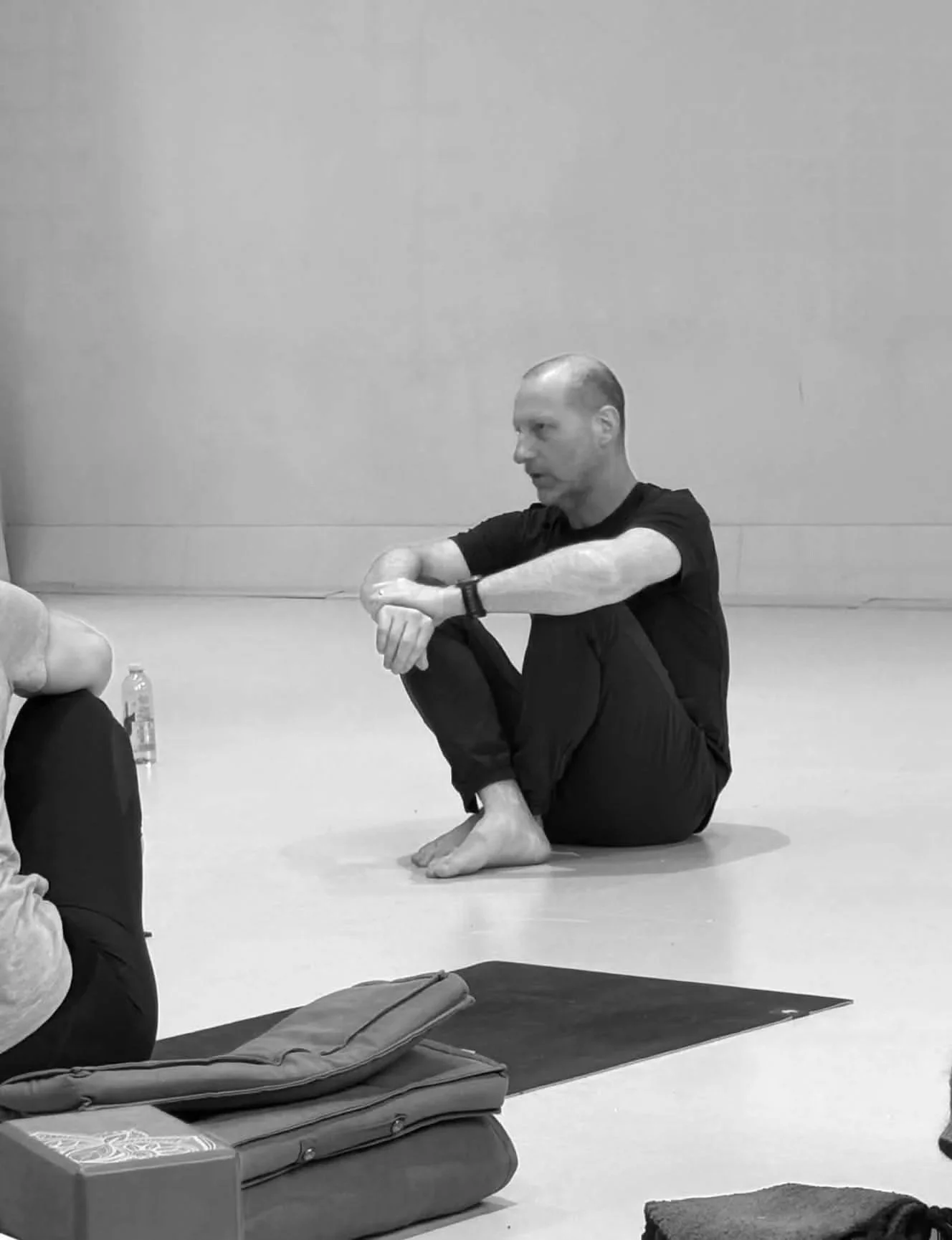
This is a lecture-based workshop and aimed at those who have an open mind and a desire to understand the Ashtanga Vinyasa Yoga system in a way that enhances whatever method of practice they choose to participate in.
Topics covered :
— Understand the context of Ashtanga Yoga
— Understand what concentration really means
— Dive deep into bandhas
— Understand what vinyasa means
— Discover techniques of integration
-
18.04.2027 9:00-16:30
-
Northern Light Yoga
Rosenborggata 9
0356 Oslo
Norge -
NOK 1650,-
IF YOU WOULD LIKE TO COMMIT TO THE FULL TWO-WEEK PROGRAM, WE HAVE A LIMITED NUMBER OF SPOTS AVAILABLE.
PRICE: NOK 8900,-
BUILT IN PRIMARY: An Intelligent Path into Second Series
OSLO, Saturday 24 — Sunday 25 April 2027
Second series doesn't ask your body for anything new. Kapotasana, leg-behind-head, Karandavasana, Pasasana: every one of these difficult postures is a combination of movement patterns you've already met, many times, in primary series. When a posture won't come, the useful question isn't "when will I be given it?" but "what haven't I built yet?"
Over two days we'll explore the five movement patterns that run through the Ashtanga system: back bending, external hip rotation, twisting, forward bending, and arm balancing. We'll look at where each one begins in primary, what most commonly restricts it, and how it gets combined and loaded in second series. You'll get enough anatomy to understand what's actually limiting you (and what isn't), practical tests to find your own missing pieces, and specific ways to work them in primary, where they're built safely.
Awareness of the structure of the anatomy, as well as knowledge of the purpose of key postures and movement patterns , can help us move forward in a safe and intelligent way. When we’re informed in this way, we keep the poses in context. We understand why we need to do them, what they represent to us personally, and what purpose they have within the system. This helps us avoid injuries and stay motivated to work on challenging postures.
This workshop is for experienced second series practitioners who want to understand the postures they already do from the inside, and for primary series practitioners who want an informed, safe, and accessible way to move toward second, including those who feel stuck and don´t find their way forward. You'll leave knowing which pattern to work on and where in your practice to work it.
Students are encouraged to bring their own questions, and areas of the practice that they are working on, for discussion.
-
24.04.2027 & 25.04.2027 9:00-16:30
-
Northern Light Yoga
Rosenborggata 9
0356 Oslo
Norge -
NOK 3300,-
IF YOU WOULD LIKE TO COMMIT TO THE FULL TWO-WEEK PROGRAM, WE HAVE A LIMITED NUMBER OF SPOTS AVAILABLE.
PRICE: NOK 8900,-
ASHTANGA YOGA MYSORE WORKSHOP
OSLO, Mon 19—Fri 23 April & Mon 26—Fri 30 April 2027
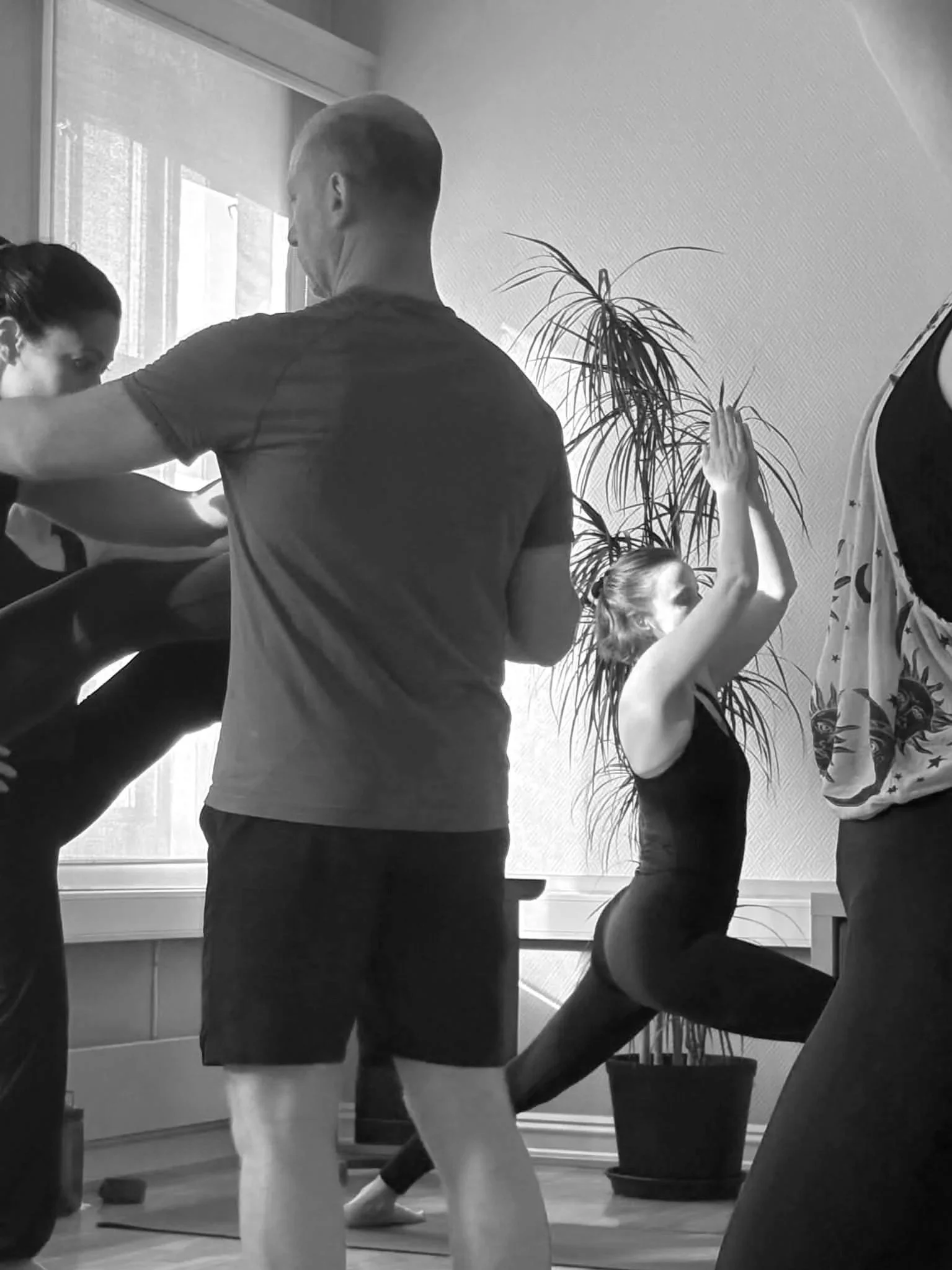
The magic of the Ashtanga Yoga Mysore Workshop is that it allows you to receive personalized, individual instruction for your practice while sharing the energy and inspiration of the group. The teacher holds the space for your growth in the practice of yoga.
Students deserve individualized attention in their practice. In the Ashtanga Yoga Mysore Workshop, David shares techniques and tools that are specifically relevant to you and what’s going on in your practice. In his way of seeing the practice, this is where true teaching and learning happens. When guidance specific to you is aligned with your needs, growth and change naturally follow.
Yoga is very much about relationship: the relationship you have with the practice and the relationship you have with the teacher who is guiding you. Relationship requires time and space to engage. This is why, in the Ashtanga Yoga Mysore Workshop, David limits the number of students in the room at one time to a maximum of 12. This is also why I require that you, the student, commit to signing up for 5 days of practice. With my commitment to small numbers and your commitment to daily practice, there is an opportunity for a transformative and in-depth relationship.
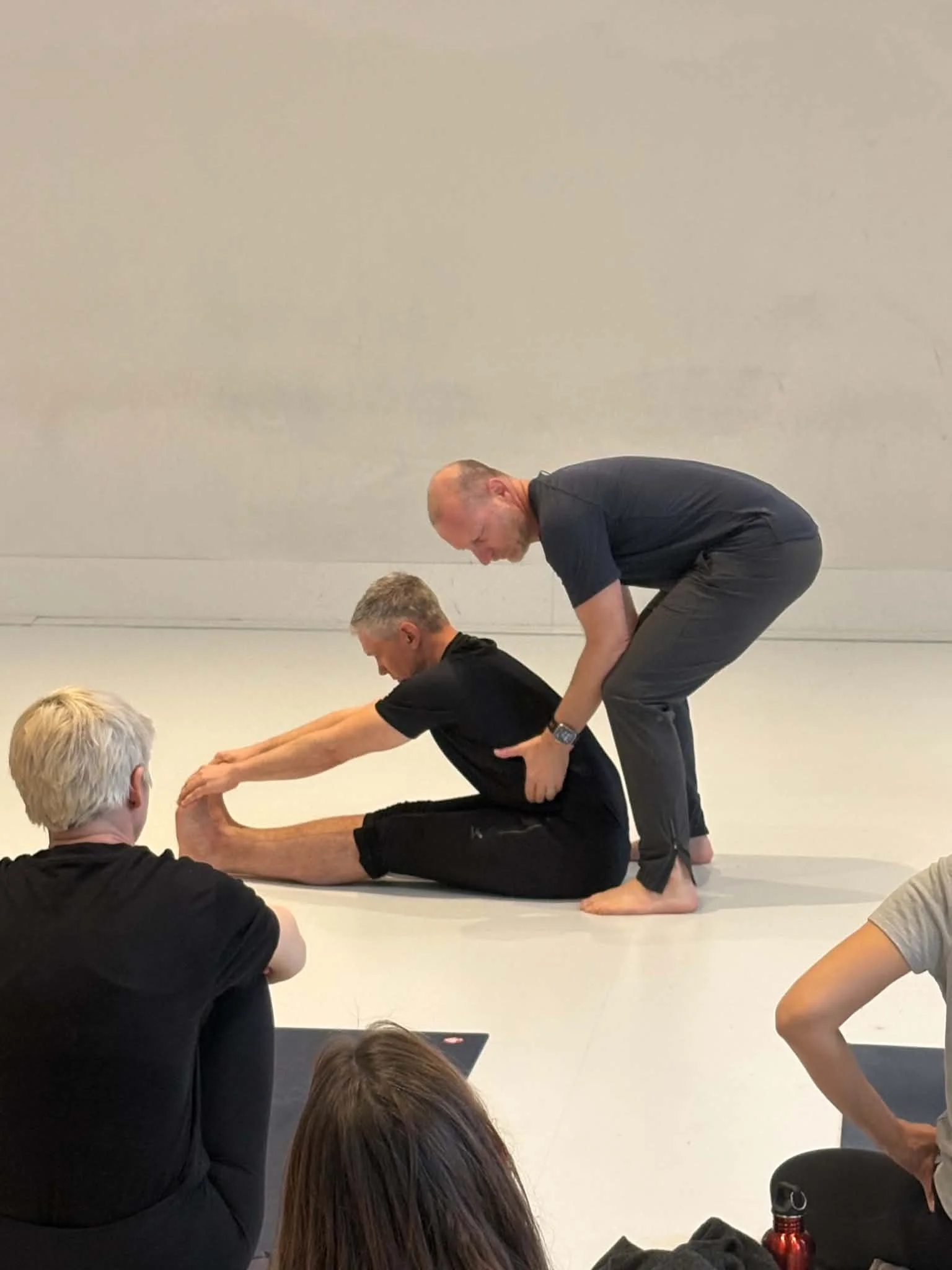
In the “Mysore” method, the group of students each practice the series of postures they have learned, but at the pace of their own breath. The Mysore method provides the opportunity for individualized practice within a group setting, rather than a led or guided class where everyone is doing the same pose at the very same moment. In the Mysore method, students are supported and assisted in the practice where and when they need it. This allows for a deeper connection to develop between teacher, student, and the practice. Over five days of daily practice in the Ashtanga Yoga Mysore Workshop, students go through a process of exploring their practice deeply. Growth happens as a result of the amount of attention I give students and their dedication to the discipline of daily practice. The effects will encourage and inspire you. The only requirement is being open minded and receptive to learning. Knowing the practice of Ashtanga Vinyasa Yoga is not required.
IF YOU WOULD LIKE TO COMMIT TO THE FULL TWO-WEEK PROGRAM, WE HAVE A LIMITED NUMBER OF SPOTS AVAILABLE.
Contact minka.qvale@gmail.com
-
Mon 19 — Fri 23 April
& Mon 26 — Fri 30 April
Group 1: 6:00-7:45
Group 2: 7:45-9:30 -
ZEN HOUSE,
Sporveisgata 29
Oslo, Norge -
PR. 5 DAYS: NOK 2500,-
IF YOU WOULD LIKE TO COMMIT TO THE FULL TWO-WEEK PROGRAM, WE HAVE A LIMITED NUMBER OF SPOTS AVAILABLE.
PRICE: NOK 8900,-